Our portfolio
Technical analyses, simulations, expert reports, open source intelligence (OSINT) and market intelligence in rocket technology, spaceflight and defence.
What we offer
Well-founded assessments, even when information is limited.
Missile analysis
Threat analyses, technical reconstructions, expert reports, open source intelligence (OSINT).
Space transportation systems
Performance analyses, concept design and technology developments in spaceflight.
Innovation and new markets
Ideas and support for new technologies, applications and markets.
Technical due diligence for investors
Expert reports on market and technology for investors, with a focus on rocket and space applications.
Seminars, lectures, and training
Training for professionals and organisations in rockets, spaceflight, defence and non-proliferation.
Software tools
Our own software tools for analysis and research, including the Rocket Database Toolkit.
01
Missile analysis
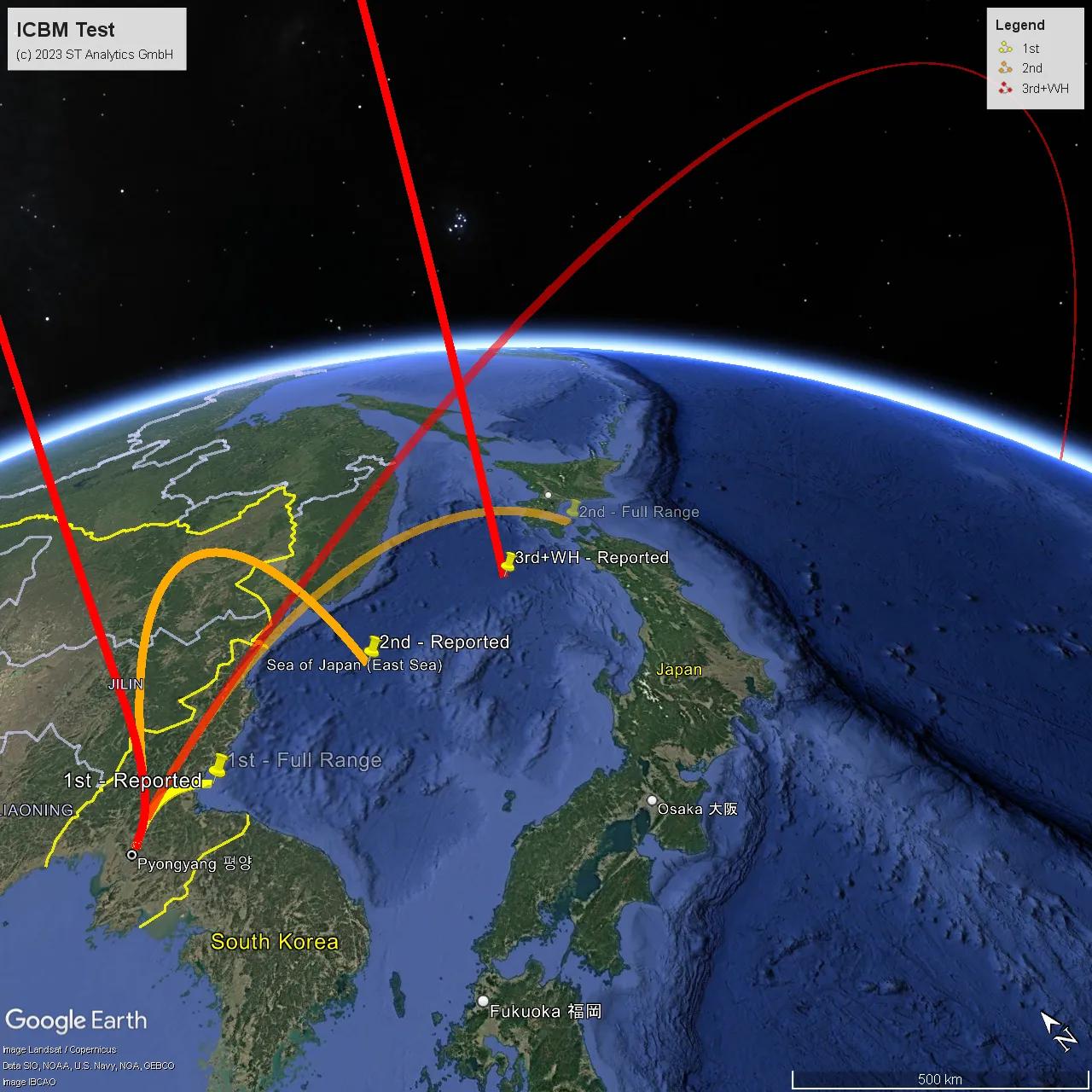
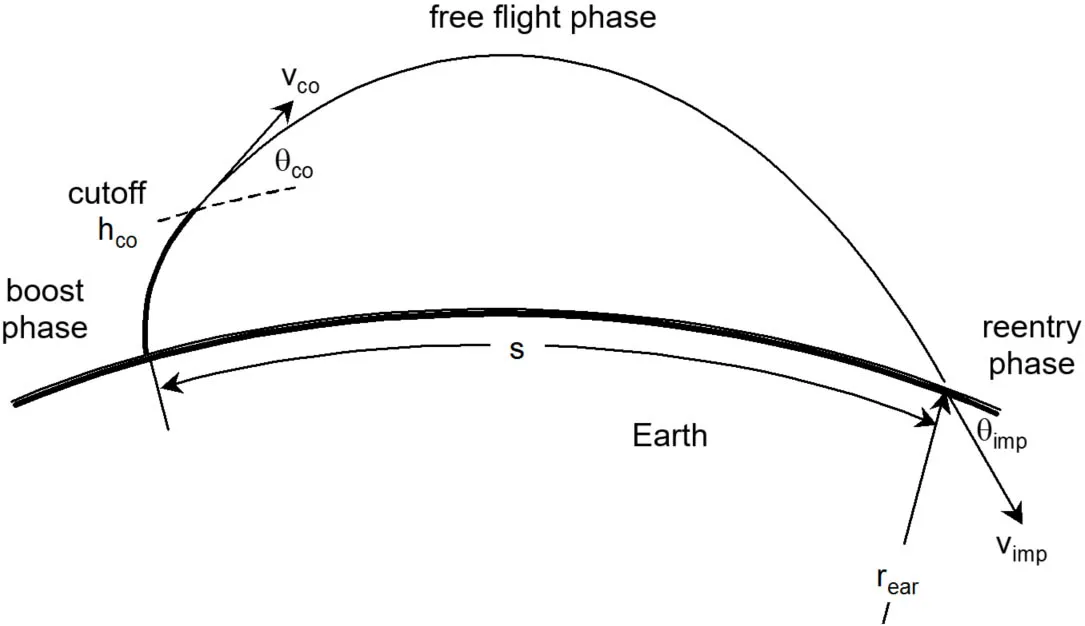
We draw on more than two decades of personal experience in missile analysis. Technical studies of ballistic missiles, hypersonic systems and cruise missiles, through to missile defence systems, allow well-founded statements on threat and deployment scenarios. Added to this is the bigger picture: looking at entire programmes, including their economic and political aspects, allows an assessment that goes far beyond purely technical analysis, even when information is limited.
This approach allows statements on missile programmes, their performance, status and availability, and on proliferation aspects. It also yields robust findings on incidents involving missiles.
Examples of how this unique know-how has been applied:
- Paper on the technical analysis of missiles
- Report on a method for assessing a missile programme with limited information
- Support for the Dutch Safety Board in the investigation of the crash of flight MH-17 (July 2014), including a hearing before the Dutch parliament
- Reconstruction of events in crisis regions, such as the shootdown of flight PS-752 near Tehran (January 2020), the strike on a market in Ukraine (September 2023) or the explosion near a hospital in Gaza (October 2023)
- Repeated consultations with various United Nations panels of experts
- Participation in the EU projects Odin’s Eye and Odin’s Eye 2 on the conceptual design of a space-based early warning system for missile defence
02
Space transportation systems
Space has fascinated humankind for centuries. With our expertise, you can better understand the technical and commercial hurdles on the way into space and seize the enormous opportunities without ignoring the risks.
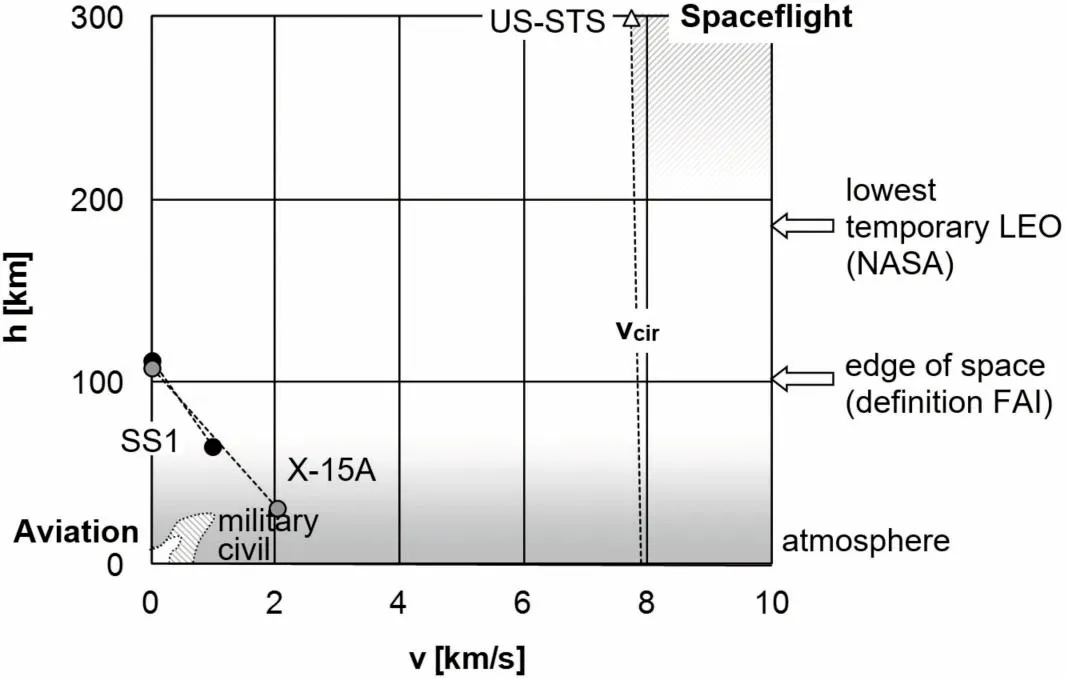
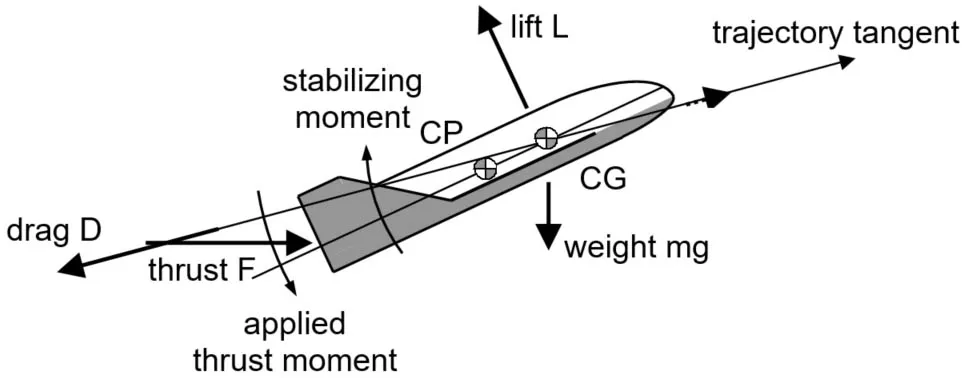
Whether the topic is space transportation systems, satellite constellations or entirely new applications, we support you with performance analyses of launch systems (from microlaunchers to reusable spaceplanes), with the positioning of constellations, or with assessments of the commercialisation of new ventures. We can examine projects from the technical, the economic and the political side.
Examples:
- Position papers on the benefits and commercialisation of spaceflight
- Performance analysis of launch vehicles
- Concept design of space transportation systems
- Assessments of the technical and financial feasibility of projects
- Evaluation of novel ideas with regard to feasibility, market opportunities and political environment
03
Innovation and new markets
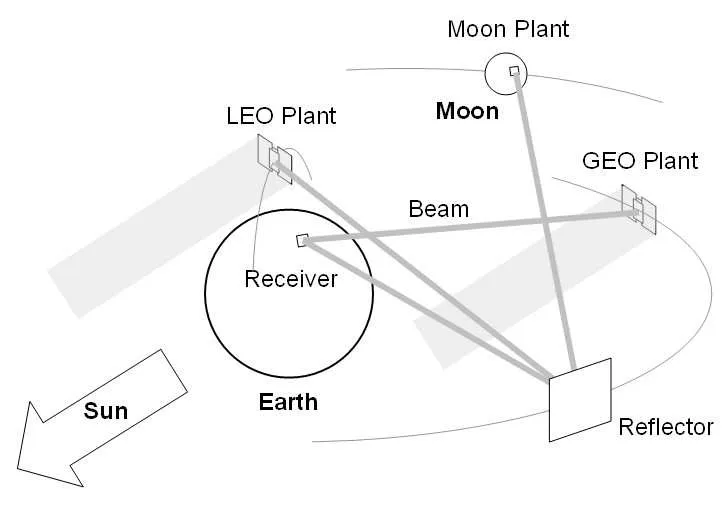
Innovation cycles have been accelerating for many years, yet not everything sold as new is actually new. In defence and space in particular, “new” ideas are once again pushing onto the playing field of global markets, and the opportunities for founding new companies seem better than they have been in a long time.
We keep our finger on the pulse and help you develop innovative solutions and assess technical hurdles, market opportunities and political showstoppers. All too often underestimated: we also help you find the real problems that innovative products and services can then solve.
We draw on the following experience:
- A deep understanding of the history of spaceflight (technology, economics, politics) and of its risks and failures
- Close involvement in the space and defence sectors through many years of continuous cooperation with industry, think tanks and universities
- Close observation of the start-up landscape in Germany and Europe in defence and space
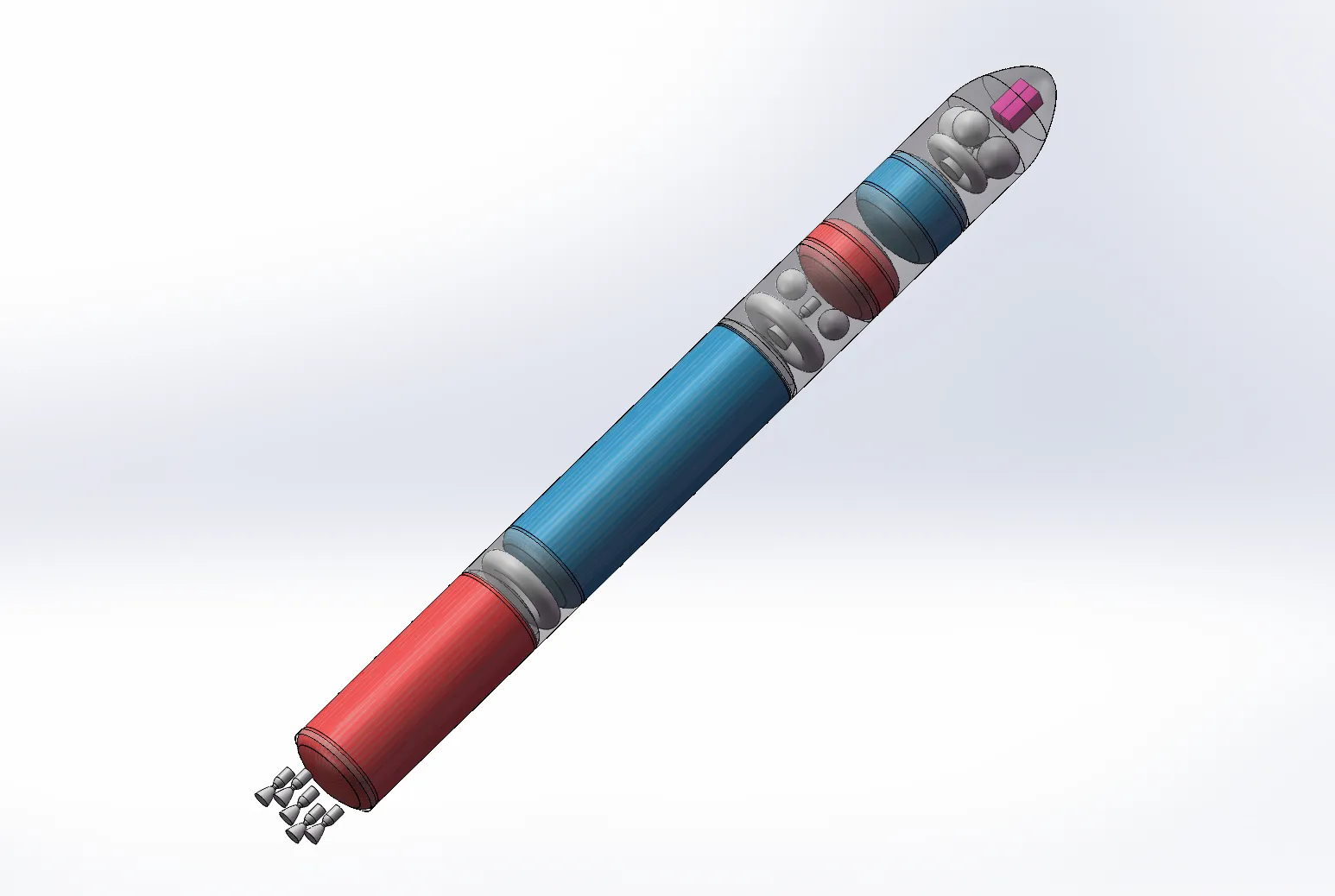
- Development of our own concept for a microlauncher start-up, through to a complete business plan (2015–2018)
- Long-standing contacts with excellent space-oriented universities in Germany and the USA (TU Munich, Munich University of Applied Sciences, UniBw Munich, Princeton University, MIT, …)
04
Technical due diligence for investors
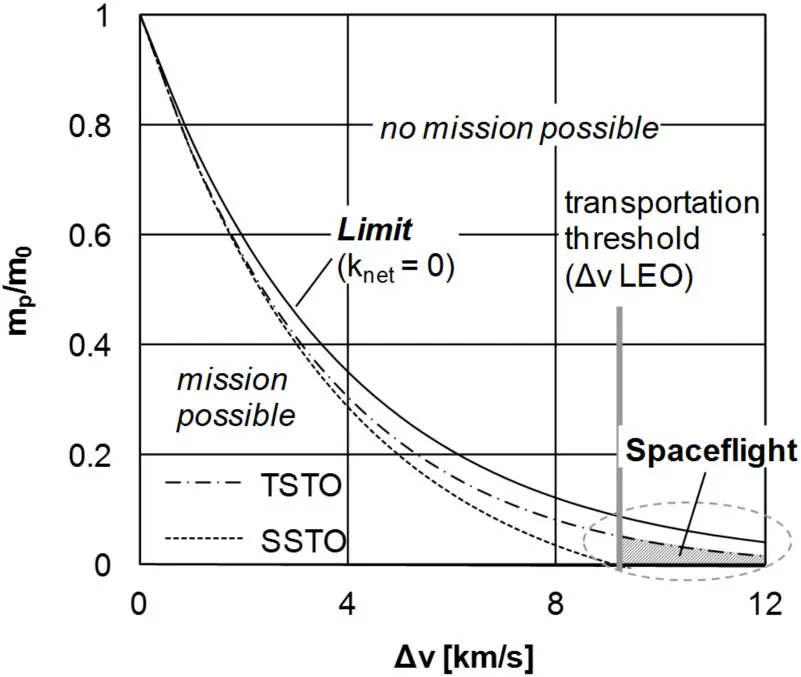
So far, ‘New Space’ has to be described as an adventure with mixed results. Success stories such as SpaceX are matched by numerous failures such as Skylon. For investors, it is not always easy to judge the chances of success of new start-ups, or of established companies, in space and defence.
We support you in evaluating ambitious ventures, above all with regard to technology, but also with regard to the market. Our international network also offers opportunities to find reliable partners in both directions, whether financier or start-up.
We can draw on the following experience:
- Expert report on the future development of private satellite launchers (microlaunchers) for a launch site provider (2015)
- Involvement in the preparatory work for founding two microlauncher start-ups (2017–2018) and one space propulsion start-up (2019–2020)
- Technical expert reports (technical due diligence) for venture capital funds in various investment rounds for European New Space start-ups (since 2016)
- Preparation of an investor-oriented overview of German defence start-ups (2025)
05
Seminars, lectures, and training
We offer a broad range of training in space and rockets, from lectures and seminars to courses lasting several days.
Possible topics range from technical and political overviews of missile programmes and the issue of space weapons to the benefits and commercialisation of space, as well as the fundamentals of space transportation systems and the history of hypersonic systems.
We can build on many years of experience:
- Several years of involvement in developing the lectures “Raumtransportsysteme” (space transportation systems) and “Nutzen der Raumfahrt” (benefits of spaceflight) at TU Munich (Prof. Schmucker)
- Since 2015, lecturer for the course “Fernflugkörper” (missiles) for future engineers (master’s programme) at the University of the Bundeswehr Munich
- Frequent exchange with, and seminars at, recognised organisations such as the Stockholm International Peace Research Institute (SIPRI), the Federation of American Scientists (FAS), the United Nations (UN), …
- Briefings at university institutes such as the Hoover Institution at Stanford University, Pardee RAND Graduate School, Harvard Kennedy School, the Program on Science and Global Security at Princeton University, LISD at Princeton University, the Institute for Peace Research and Security Policy at the University of Hamburg (IFSH), …
06
Software tools
We develop and use our own software tools for our analyses. Examples of selected tools, including the Rocket Database Toolkit (Light), are shown on the Tools page.
Our focus is on tools for open source intelligence (OSINT), for visualising and evaluating large volumes of data, and for analysing rockets. These include:
- RAT+ – Rocket Analysis Tool Plus: Sophisticated trajectory generator with numerous additional functions for generating, reconstructing and optimising trajectories, and for validating the performance of rockets
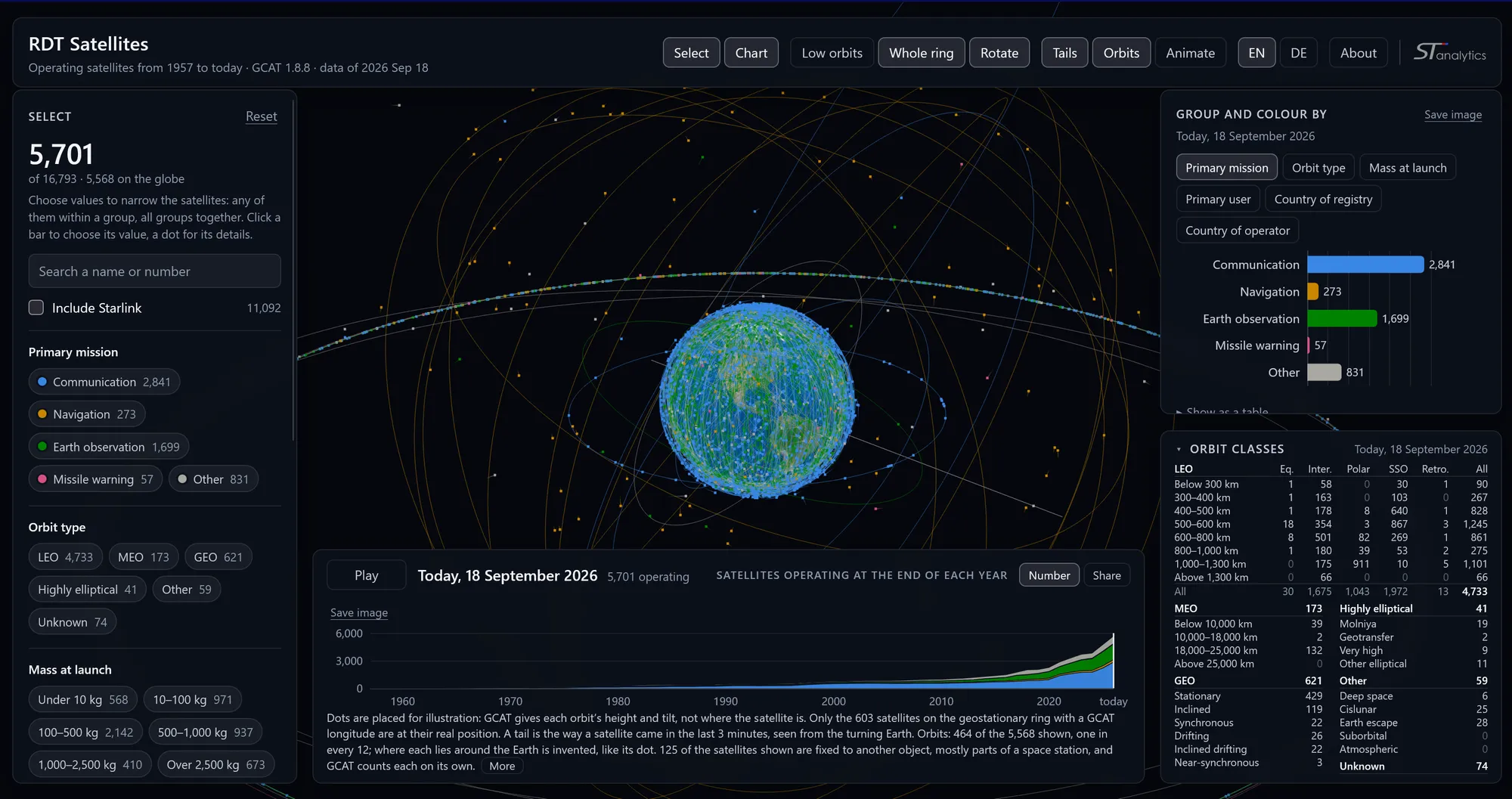
- RDT – Rocket Database Toolkit: Analysis and visualisation tool for displaying historical and current satellite orbits and rocket launches (also as Light versions for satellites only or launches only)
- RIT – Rocket IR-Signature Tool: Novel method for calculating the infrared signatures of missiles during ascent and re-entry in near real time (exhaust plume and body)